

Just as a migrant caravan now numbering in the thousands set out from Central America to the U.S. two weeks ago, Honduras’ top diplomat in Atlanta was discussing the factors driving emigration from her country — and ways the U.S. can help address it.
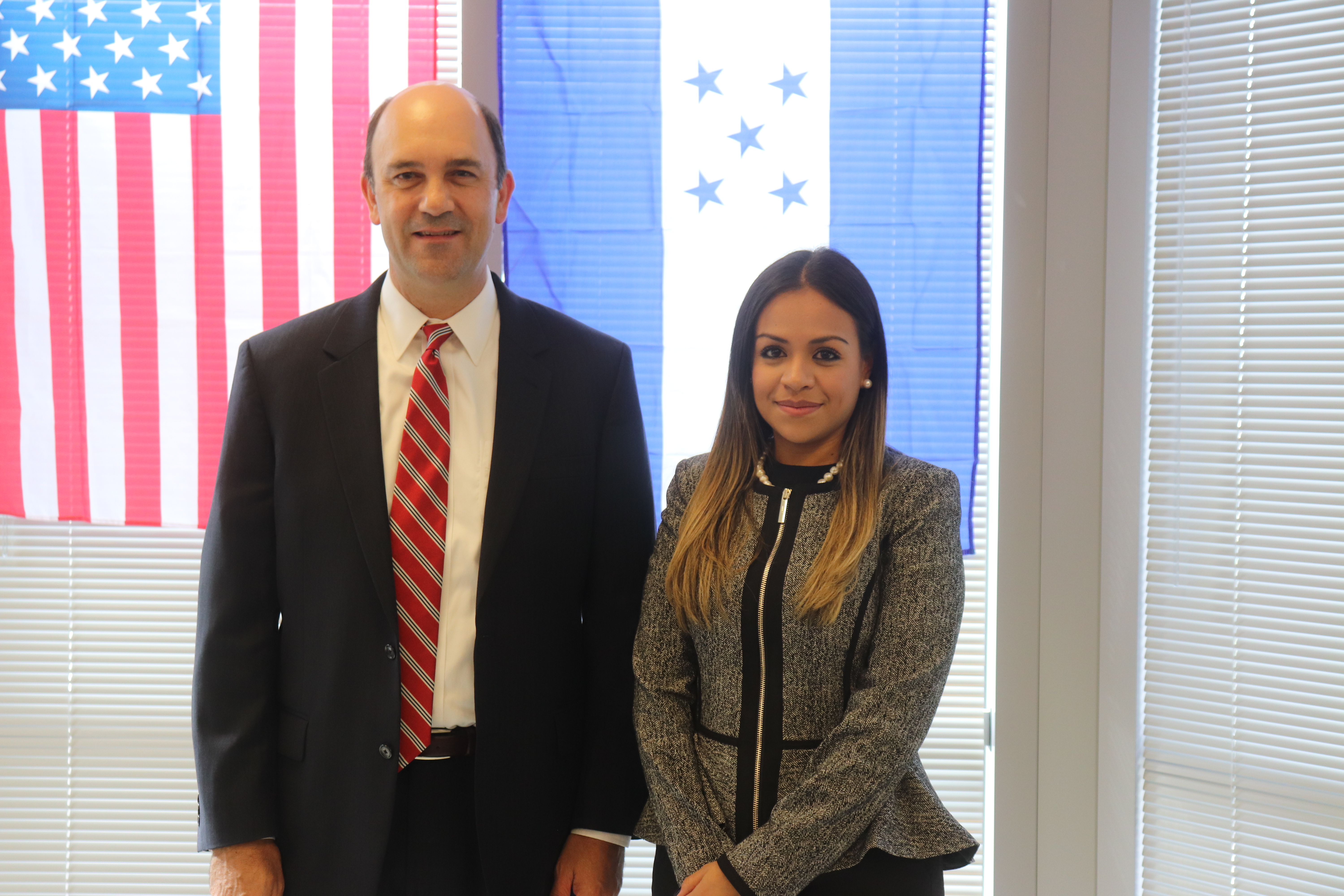
Maria Fernanda Rivera Fiallos spoke with Global Atlanta during an Oct. 16 Consular Conversation, the latest in a series of monthly discussions hosted by Miller & Martin PLLC in Midtown.
Some have speculated that the swelling caravan vexing authorities in Mexico and the U.S. was orchestrated by the leftist Libre opposition party in Honduras.
An influential former party lawmaker, Bartolo Fuentes, has admitted helping small groups organize online. But he reportedly attributed the true size of the exodus to the growing dissatisfaction of people living in a country plagued with violence and corruption.
Honduras’ Secretariat of Foreign Affairs, meanwhile, issued a statement in which it “urges Hondurans participating in this irregular movement to not let themselves be used by a movement that clearly seems to be political and that seeks to disturb the governability, stability and peace of our countries.”
But according to on-the-ground news reports, many Hondurans (who make up the bulk of the group now traveling through Mexico) were simply waiting for an opportune time to get out. Traveling alone means paying “coyotes” thousands of dollars for safe passage, while walking with a throng represents finding safety in numbers while avoiding crippling fees.
She didn’t comment directly on the caravan or the politics surrounding it, but Ms. Rivera said it’s true that many of her countrymen travel to the U.S. for economic opportunity, not simply to seek refuge from violence.
The solution, however, is not to cut off aid, as President Donald Trump has threatened, but to continue collaboration to improve governance, tackle drug trafficking and help give people more reasons to stay, Ms. Rivera said. Most of the 180,000 Hondurans in her four-state territory the Southeast U.S., she said, are working nonstop to send money back to their families — often in jobs Americans won’t take.
“We know that emigration is a decision that anyone can make,” she said. “What we’re trying to do is better the conditions of the country so people don’t do it.”
What hasn’t helped: Plans under the Obama administration to increase aid to a billion dollars a year to boost the so-called Alliance for Prosperity in the “Northern Triangle” countries never reached full strength. The U.S. has provided $2.6 billion in overall aid (separate from the alliance) between 2015-18, about half of what the former president proposed.
“That has lowered our ability to deal with the immigration issue,” Ms. Rivera said.
Now, Mr. Trump says he will begin drawing down aid money in retaliation for the countries’ failure to stem the flow of migrants, days after Vice President Mike Pence gave an Oct. 11 speech to their leaders at a conference on Central American prosperity in Washington.
The Long Road: Investment
As for the economic issue, it’s a chicken-and-egg problem: Honduras needs more foreign investors to provide job opportunities that stave off the poverty that drives much of its out-migration. But some of the same factors blamed for poverty also drive away those who could bring in more jobs.
In response to an audience question about how Honduras can possibly assure American business leaders that it’s worth the risk, Ms. Rivera called for a nuanced view of a country of 10 million people.
“I think they need to give us a chance. They need to go back to Honduras. We have a lot to offer,” she said. “The best way that the U.S. can help us with that is by investing in our country.”
As examples, she pointed to planned factory investments by footwear makers Adidas and Nike totaling a billion dollars, as well as an announcement that Georgia-based electric vehicle manufacturer Green4U that it would soon put an assembly plant on the Atlantic coast of Honduras.
Juan Orlando Hernandez, Honduras’ president, visited Green4U in Braselton, Ga., in June. It was run by the late Don Panoz, who made his name founding the American Le Mans racing series and building endurance race cars. He planned to use energy-saving technologies deployed on the track for the benefit of consumers. He died in September at 83.
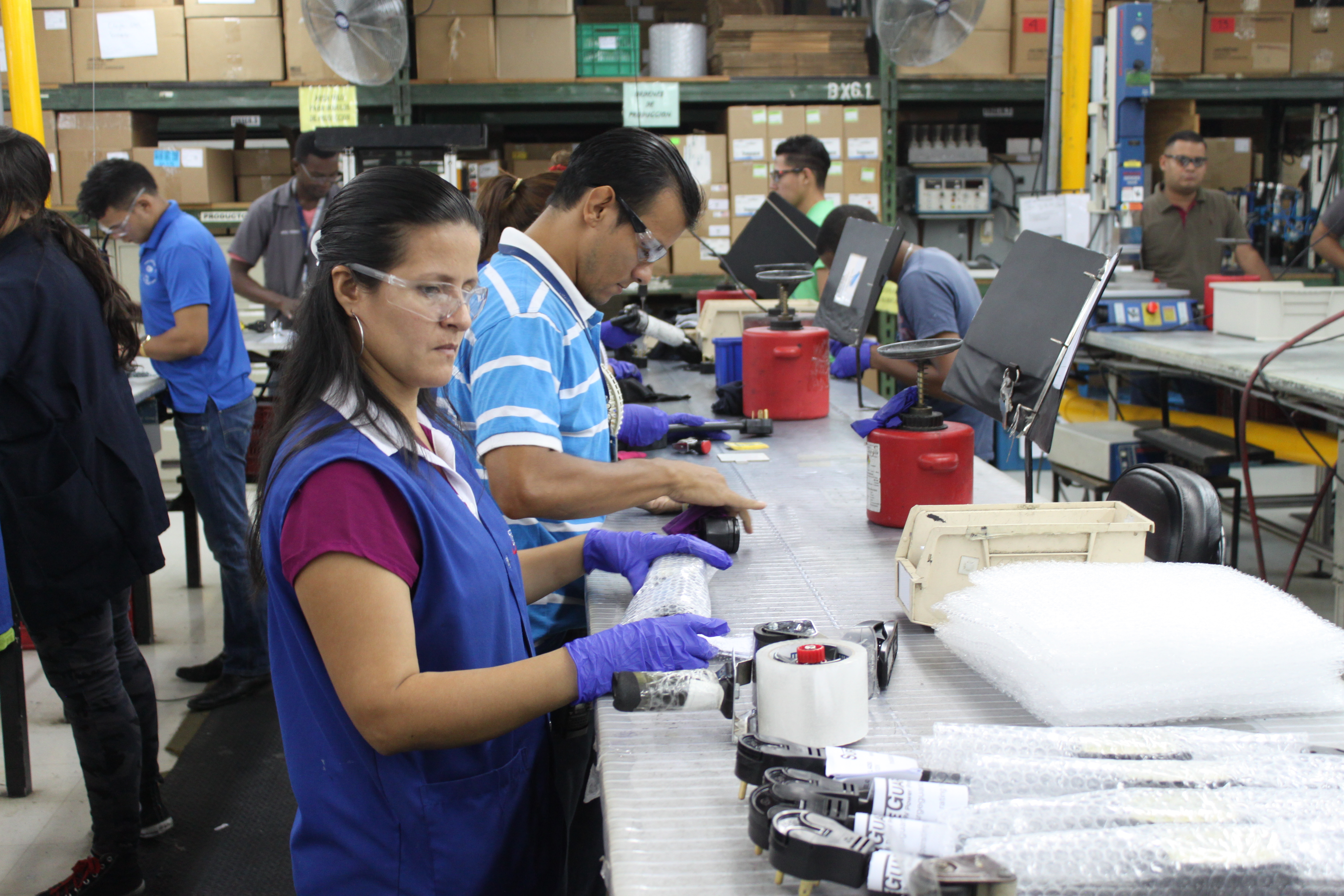
Many Georgia companies are already working in Honduras. At the Consular Conversation, representatives of Anduro Manufacturing, which employs 300 at a Honduran factory making polywoven bags for the pet food industry, registered their concerns about political risk in the country. Also active are companies like Southwire, which has a subsidiary factory in San Pedro Sula in the electrical components sector.
Atlanta-based HOI, formerly Honduras Outreach International, has tried to spur micro enterprises like bakeries and motorcycle repair shops in Olancho, the northeastern state where the organization operates a massive ranch and administers health and education programs. (The nonprofit’s more than 25-year history in the country won it a visit from President Hernandez in 2015.)
Promoting a “culture of investment and entrepreneurship” is essential to changing the migrant mindset and getting people to develop their own communities, Ms. Rivera said in the Global Atlanta interview.
“Some people would rather save to pay someone $10,000 to get them to the U.S. than invest those $10,000 in a small business,” she said.
The Honduras 2020 plan aims to change all that, targeting six sectors identified by an outside consultancy as holding major promise for attracting outside investment: tourism, light manufacturing, agribusiness, apparel, business-process outsourcing and social housing. Coffee is also a major export product, with more than 120,000 producers across the country.
Immigration Challenges Not New
For her part, Ms. Rivera said she is finally beginning to carve out time to promote investment in the country after dealing with an array of immigration-related challenges so far this year.
The U.S. government ended what’s called Temporary Protected Status for Hondurans who came to the U.S. in the aftermath of Hurricane Mitch in 1998, triggering questions about how families could keep their status current during an 18-month transition period.
“It’s a decision of the U.S. government, obviously, so we respect it, and we are grateful for the two decades that we were allowed to have our nationals here,” Ms. Rivera said.
At the same time, the sheer amalgam of immigration issues has made it challenging for families with varied statuses to navigate the system; many have kids who are American citizens.
The TPS decision came after the reversal of Deferred Action for Childhood Arrivals, which shielded from deportation young undocumented immigrants who arrived in the U.S. as children and continued working or going to school.
“There are a lot of children whose parents have TPS and are under DACA,” Ms. Rivera said, noting that the consulate is providing free legal consultations to the Honduran community. Between 80 and 120 people show up at the consulate every day in need of various services, she said.
Ms. Rivera’s workload didn’t change too much during the family separation crisis that emerged after the Trump administration unveiled its so-called “zero-tolerance policy,” which treats coming into the U.S. somewhere other than a border crossing as a criminal act.
Few Hondurans were detained in her consulate’s territory, but she said the scenes that unfolded affected her personally as a mother. As a diplomat, she noted that these issues aren’t new.
“Family separation is not a new thing — it’s not something that has happened this year. It has happened all along and continues to happen regardless of any policy changes that came from the media burst we have had,” Ms. Rivera said.
Recently the consulate worked with the Georgia Department of Family and Child Services to reunite three children (and soon a fourth) with their mother, who was deported while living in another state and had sent her children to live with relatives in Gainesville, Ga.
Ms. Rivera, whose father happens to be Honduras’ ambassador to Mexico, says she works closely with the Mexican consulate here and with the Honduran consulates in Mexico.
She also collaborates frequently with the Atlanta consulates of her country’s Northern Triangle neighbors: Guatemala and El Salvador. They visit detention centers, meet with county leaders and authorities and hold information sessions together.
“Our voice is way louder if we work together.”

The Dean Rusk International Law Center at the University of Georgia is the presenting sponsor of Global Atlanta's Diplomacy Channel. Subscribe here for monthly Diplomacy newsletters.
